What sundowning looks like at home
Many people living with Alzheimer's or another dementia become more confused, restless or upset in the late afternoon and evening. It's often called sundowning, and it can be one of the hardest parts of caring for someone at home.

Keep the day predictable
Routines are calming. Try to keep waking, meals, activity and bedtime at about the same times every day. Plan appointments and outings for the morning, when energy and focus are usually better.
Change the light and the noise
- Open the curtains and get outside in daylight earlier in the day.
- Turn lights on before it gets dark so shadows don't build up.
- Turn down the TV and the news in the evening; choose soft music instead.
- Keep the evening simple, with fewer visitors and tasks.
Redirect, don't correct
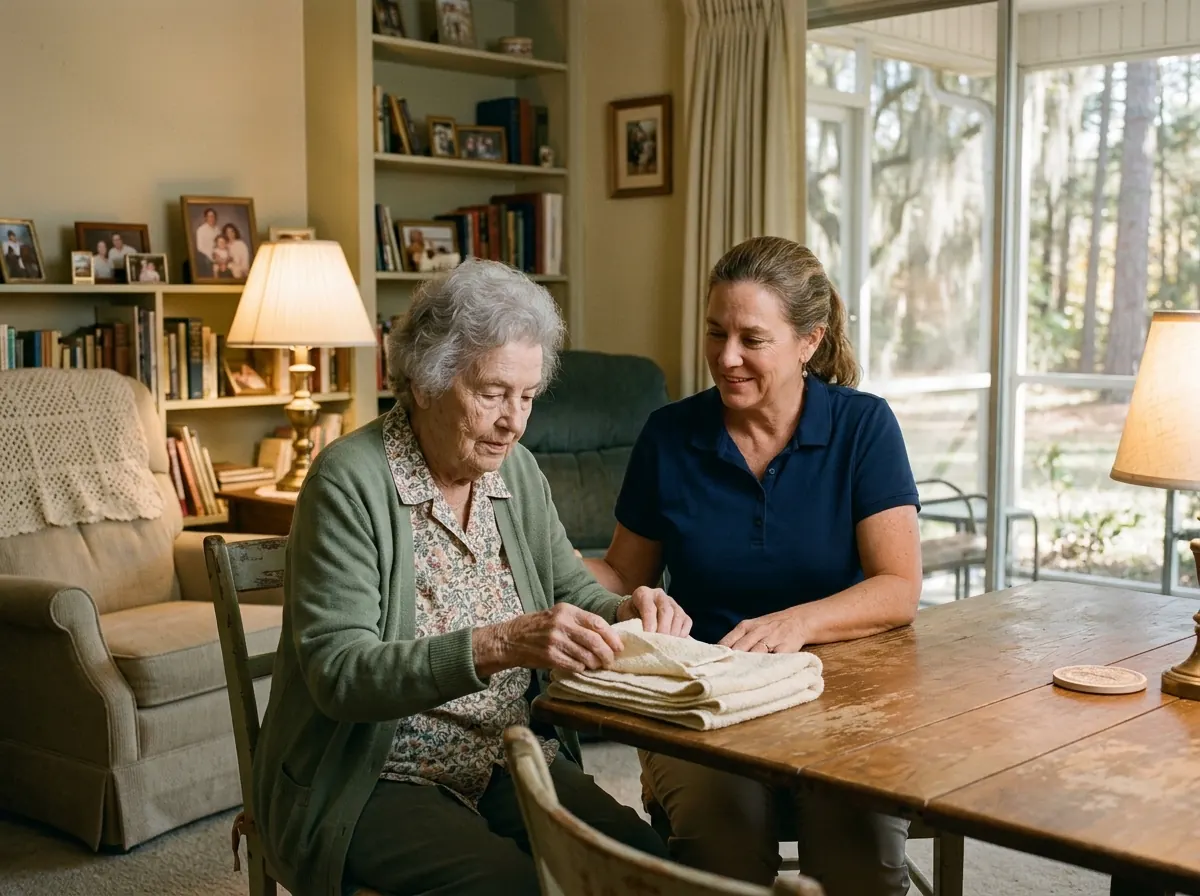
Arguing with confusion usually makes it worse. Acknowledge the feeling ("You want to go home") and gently shift to something comforting: a snack, a familiar photo album, folding towels, a short walk on the porch.
Take care of yourself too
Sundowning is exhausting for the whole family. Evening or overnight help from a dementia-trained caregiver, or a few hours of respite care, can give you rest, and often helps your loved one settle with someone calm and fresh.
Related articles
 Paying for careCan You Get Paid to Care for a Parent in Florida?
 Family caregivingHow to Choose a Home Care Agency in Lake City, FL
 Family caregivingSigns It's Time to Bring In Help at Home
Have questions about care for your family?
Talk with our Lake City care coordinator. The consultation is free.